Ó£ÌÒÊÓÆµ

Clearing offers from 48 UCAS tariff points. Subject-specific requirements still apply. See the entry requirements section for details.

Read deeply. Perform boldly. Build creative skills for the future.

Combine your passion for theatre, performance, and literature with the BA (Hons) Drama and English degree at the Ó£ÌÒÊÓÆµ. This interdisciplinary joint honours programme allows you to engage with modules from both the Drama and English degrees and offers full access to the range of unique opportunities developed by both programmes.

The English element of the course considers literature from a variety of theoretical, historical, and cultural perspectives, while the theatre and performance components allow students to encounter creative practice, technical theatre, and performance skills together with a critical study of drama and theatre.

Led by experts in English literature, theatre, and performance research, as well as professional performers, theatre makers, and industry specialists with national and international connections, this course will help prepare you for a wide selection of careers.

Combine your passion for theatre, performance, and literature with the BA (Hons) Drama and English degree at the Ó£ÌÒÊÓÆµ. This interdisciplinary joint honours programme allows you to engage with modules from both the Drama and English degrees and offers full access to the range of unique opportunities developed by both programmes.

The English element of the course considers literature from a variety of theoretical, historical, and cultural perspectives, while the theatre and performance components allow students to encounter creative practice, technical theatre, and performance skills together with a critical study of drama and theatre.

Led by experts in English literature, theatre, and performance research, as well as professional performers, theatre makers, and industry specialists with national and international connections, this course will help prepare you for a wide selection of careers.

Professional Writing Support

We work alongside the Royal Literary Fund to give you one-to-one writing support from professional writers should you want it. Whether it's structuring an essay, writing more clearly, or improving your style, Royal Literary Fund Fellows are on hand.

Why study Drama and English at Lincoln?

✔ Combine creative practice with critical study Explore literature and theatre side by side, developing skills in performance, storytelling, critical analysis, interpretation, and creative expression. 

✔ Ó£ÌÒÊÓÆµ a diverse range of texts and performance styles From Shakespeare, classical drama, and the avant-garde to contemporary theatre, film, popular culture, and modern literature, examine how stories reflect identity, society, politics, and culture. 

✔ Tailor your degree to your interests Benefit from the flexibility of a Joint Honours programme, with the freedom to choose from a wide range of modules across both Drama and English and shape your studies around your strengths and ambitions. 

✔ Access opportunities across the School of Creative Arts Take modules alongside students from disciplines such as fine art, dance, musical theatre, and other creative subjects, broadening your perspective and collaborative experience. 

✔ Undertake independent and creative projects In your final year, you can pursue an independent dissertation on a topic of your choice, take part in a Drama degree Showcase, or choose both core modules. 

✔ Learn from experienced academics and practitioners Teaching is informed by current research and professional practice, with expertise spanning theatre-making, performance studies, Gothic literature, women’s writing, contemporary culture, and creative practice. 

✔ Develop practical theatre-making and performance skills Gain experience in acting, directing, scriptwriting, devising, collaboration, rehearsal processes, and performance through practical workshops and productions.

✔ Work in dedicated performance facilities Access specialist rehearsal studios and theatre spaces that support practical learning, creative experimentation, and performance work. 

✔ Build valuable transferable skills Develop confidence and expertise in communication, presentation, public speaking, research, critical thinking, creative problem-solving, collaboration, project management, and writing for different audiences. 

✔ Gain real-world collaborative experience Work closely with fellow students on productions, performances, and creative projects, helping you build teamwork and leadership skills valued by employers. 

✔ Prepare for a wide range of careers Graduates can pursue opportunities in acting, directing, producing, theatre and the creative industries, as well as publishing, journalism, teaching, advertising, public relations, marketing, copywriting, and many other sectors. 

✔ Ó£ÌÒÊÓÆµ in a vibrant cultural city Lincoln offers a thriving arts scene, independent venues, theatres, cultural events, and a welcoming student community, all within a historic and walkable city-centre campus.

Specialist Facilities

Students can work and perform in the Lincoln Arts Centre, a £6 million, 450-seat theatre on campus. The Centre hosts a year-round programme of performances from students and national touring companies. Facilities include industry-standard studio and rehearsal spaces. Students on this course receive event/performance credits which can be used against ticketed performances at the Lincoln Arts Centre.

Interior of the Lincoln Performing Arts Centre main auditorium with colourful seating

What you'll learn

You'll study both literature and theatre through practical workshops, performances, seminars, and critical discussion, developing creative, analytical, and professional skills along the way.

  • Explore literature across genres and periods Ó£ÌÒÊÓÆµ poetry, fiction, drama, contemporary media, literary theory, and cultural criticism, from medieval and Renaissance texts to Gothic, American, and twenty-first century literature.
  • Examine theatre, performance, and culture Explore contemporary theatre, live performance, audience experience, and how literature and drama reflect society, identity, politics, and culture.
  • Create original work and conduct independent research Develop your own performances, investigate topics that interest you, and build the confidence to work creatively and independently.
  • Personalise your studies Choose from a wide range of optional modules, including areas such as Shakespeare, stage combat, acting for screen, theatre for children, popular performance, and scriptwriting.
  • Learn through collaboration and professional practice Work with students across creative disciplines, including opportunities to collaborate on screen-based projects and gain insight into the cultural and creative industries.
  • Engage with industry professionals Benefit from guest lectures, workshops, theatre visits, field trips, and opportunities to learn from practitioners, writers, academics, and industry leaders.
  • Gain real-world experience You may have opportunities to study abroad or undertake placements with theatre companies, arts organisations, schools, and other professional settings.
  • Showcase your abilities through practical and written work Assessment reflects the creative nature of the course, with performances, projects, presentations, and coursework replacing traditional sit-down examinations.

Modules

Module Overview

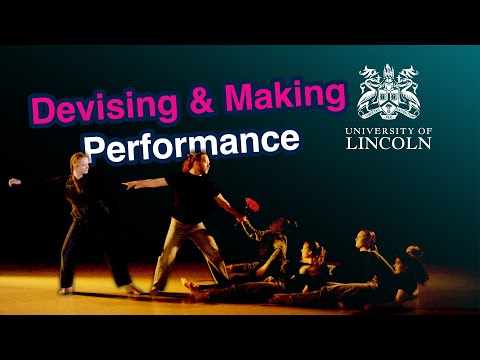
This practice-based module introduces the foundational elements of performance technique and performance making. Students undergo technical training in ensemble and spatial awareness, physical skills and movement for theatre, the operation of the voice, writing for performance, and the fundamentals of lighting and sound design. Alongside technique sessions, they take part in devising workshops where they investigate the theories and methodologies that underpin performance making. As the semester progresses, students form groups and create performances informed by the techniques and theories they have been exploring. At the end of the module, they are assessed through a presentation of work - an Annotated Performance - which will demonstrate an applied understanding of technique and the ability to engage in meaningful critical analysis of their work.

Module Overview

This highly creative and inspiring module is the practical culmination of our students' first year, in which the artistic skills and performance techniques learned in Devising & Making (in semester A) are implemented in a larger group ensemble context. Students collaborate to devise, produce and perform an original piece of contemporary theatre based on the ensemble's collective exploration of a particular theme or concept under the supervision of a specialist staff member. The performance is then scheduled as part of Lincoln Arts Centre's public programme and showcased on the main auditorium stage.

Module Overview

Texts in Time: Medieval to Romantic introduces students to a variety of materials from a range of cultural and historical contexts from the 12th century to 1830, and to methods of reading historically. Students will thus build a foundation on writers and historical periods which they can choose to pursue in greater detail at levels 2 and 3. Students will examine literature in English in a range of forms, such as poetry, drama, fiction, and essays, and the conditions under which these materials were created. There will be a particular emphasis throughout the module on questions concerning the self in society and the cultural tensions that arise when different understandings or definitions of identity clash. The chosen texts will demonstrate and explore understandings of the self in relation to matters such as sex, gender, race, nationality, class, religion, and age.

Module Overview

‘Texts in Time: Victorian to Contemporary’ introduces students to a variety of materials from a range of cultural and historical contexts from 1830 to the present, and to methods of reading historically. Students will thus build a foundation on writers and historical periods which they can choose to pursue in greater detail at levels 2 and 3. Students will examine literature in English in a range of forms, such as poetry, drama, fiction, and essays, and the conditions under which these materials were created. There will be a particular emphasis throughout the module on questions concerning the self in society and the cultural tensions that arise when different understandings or definitions of identity clash. The chosen texts will demonstrate and explore understandings of the self in relation to matters such as sex, gender, race, nationality, class, religion, and age.

Module Overview

Fragmentation, uncertainty and conflict characterise a world in aftermath of war, at end of empire, and at the beginning of a period of radical social and cultural change. This module aims to chart the emergence of the contemporary world from these fractured beginnings through an introduction to British literature of the period 1950–2000. From the post-war Windrush migration to the rise of the historical novel at the turn of the millennium, the Angry Young Men to new feminist perspectives and postcolonialism, this module explores relevant theoretical perspectives on the late 20th Century and encourages an appreciation of the relationship between texts and their social, political and cultural contexts.

Module Overview

This module considers the range of theories that we can use when we read and think about literature. Students will have the opportunity to study psychoanalysis, feminism, Marxism and postmodernism, among others, to think about why and how we structure meaning and interpretation in certain ways. We consider questions such as ‘what is an author?’, ‘what is gender?’ and ‘why do certain things frighten us?’ through theorists such as Roland Barthes, Judith Butler and Sigmund Freud.

Module Overview

This is a practical module which explores the techniques of singing and acting a song. You will work on vocal technique, character development, and acting approaches to prepare solo numbers for performance. The module will equip you with the skills to begin to put together a rep portfolio appropriate for your voice. This will be invaluable if you are planning to apply for postgraduate study at drama school or begin auditioning for shows. Assessment will be part practical, and part based on a portfolio detailing your exploration of acting and vocal techniques through the module.

Module Overview

This module explores the nineteenth-century literature of the USA, chiefly focusing on fiction and poetry. Authors covered include Herman Melville, Emily Dickinson, Charlotte Perkins Gilman, Walt Whitman and Willa Cather, among others.

Module Overview

This module covers a broad range of twentieth-century American fiction and poetry. Beginning with Fitzgerald, other authors studied include Ernest Hemingway, Jack Kerouac, Toni Morrison, Thomas Pynchon and David Foster Wallace.

Module Overview

Arts and Health, an optional 30 credit module in Semester B, is a live brief project that offers students the opportunity to work in a professional public setting to facilitate artwork with participants. This may be a community, charity, educational, public or private sector setting in Lincoln or elsewhere. You will be given the opportunity in this module to facilitate artwork with service users, communities or clients in organisations such as We Are With You / Double Impact / NHS / YMCA / HMS or another charity or community setting.

We have successfully worked with We Are With You / Double Impact Lincoln for the past 7 years, a national drug and alcohol charity offering support to people to enable them to make positive behavioural change. Their work encompasses community support, education, help for those in the criminal justice system, mental health services, family and employment support. In recent years we have also started to grow our community settings to provide students with further professional facilitation experiences such as working with adults with lived experience within the NHS and local communities at Doddington Hall, that draw upon community arts, participatory arts, arts psychotherapeutic methods and occupational health approaches.

Students considering a career in arts-led intervention or community arts practices, will gain invaluable experience of planning, training for, delivering and evaluating a participatory art process within a community setting.

Module Overview

This module will cover the latest technologies used in theatre and live events, from contemporary lighting and innovative live sound technology to holographic performance and virtual reality.

The module will explore how this technology is used and will encourage students to consider how contemporary technology can be used or developed to create a performance. The module will research and analyse case studies from innovative contemporary productions and manufacturers from around the world.

Module Overview

This module aims to enable students to understand the landscape for potential employment post-University. The module runs alongside the Placement module and will have the scope to feature guest talks from industry professionals.

Module Overview

Creative Audio Technologies encourages students to embrace and create using technology to facilitate an audio-based project, by exploring some of the creative tool available at the cutting edge of digital work. Students will be introduced to a spectrum of technological tools designed to enhance and record audio, before creating their own project incorporating these techniques. Existing original audio-based work – along with alternative uses of technologies – will be critically analysed in ways that embraces multiple genres, art forms and approaches to technology.

Module Overview

This module focuses on the interdisciplinary field of digital performance. “We define the term 'digital performance' broadly to include all performance works where computer technologies play a key role rather than a subsidiary one in content, techniques, aesthetics or delivery forms” (Dixon, 2007, p3).

It examines the intersection of digital media and performance in various contexts, such as interactive media on stage, biosensors and the body in performance, and social media and performance opportunities. By working with various digital technologies students can engage and explore practically how to make performance using these tools and new technologies.

Module Overview

This module examines one of the most varied literary genres extant, one that, at times, is often relegated to the margins because of its slippery nature. Students will examine early examples of fantasy and trace the genre’s development across a number of key historical epochs, from the classical and medieval periods to the twenty-first century. They will consider especially Tolkien as a pivotal force in the growth of fantasy literature and theory, as well as The Inklings, a group whose works had a profound influence on the evolution of the genre in the twentieth century. A range of subgenres of the fantastic will be explored, which may include high and low fantasy, ironic fantasy, historical fantasy, or magic realism, and, alongside primary texts, they will read selections from modern theoretical and critical texts that articulate different interpretations and approaches to the fantastic.

Module Overview

This module is part of the University's commitment to academic programmes that encourage a high level of vocational relevance. This module encourages students to think beyond their University life, reaching into the wider community to hone their skills and target future employment possibilities. The module aims to enable students to examine how arts-based organisations, educational and non-traditional arts-based establishments function and provide students with valuable workplace experience.

Module Overview

The Industry Placement Year is an exciting opportunity for students to take a year out of formal study to gain real-world experience in the creative industries. Whether you’re looking to build industry connections, develop professional skills, or explore career options, this year will give you a full-time, hands-on experience within an arts, cultural, or creative organisation.

This year is a collaborative experience between you, your employer, and the University—ensuring that you get the most out of your time in a professional setting.

Module Overview

This module examines some of the preoccupations of the fin de siècle through a series of texts and authors who helped to shape the cultural climate of the 1880s-1900s. These decades gave rise to a pervasive feeling of vital urgency and exhilaration in Britain, as well as a conflicted sense that society was teetering on a cliff edge of irredeemable degeneration. Texts will be read alongside and in light of social and political developments, such as anxieties about Britain’s empire and position on the global stage, evolution and degeneration, sexual identity, women’s rights, the rise of occultism and spiritualism, Decadence, and radical politics. The study of fin de siècle writing will be set against the backdrop of the infamous Oscar Wilde trial, and the sensationalised Jack the Ripper murders, contemporary anxieties about criminality, the empire, and eugenics.

Module Overview

Ó£ÌÒÊÓÆµ Abroad is an optional module which enables students to spend a semester studying abroad at one of the University’s approved partner institutions. Eligible students must have completed their first year of study to a satisfactory standard and successfully completed the application process for the study abroad scheme. During the semester spent abroad, students share classes with local students and study on a suite of locally-delivered taught modules which have been approved in advance by the University. Upon their return, as part of the assessment for this module, students are required to critically reflect upon their experience of living and studying in a different cultural environment and the skills acquired.

Module Overview

This module examines key British medieval texts, primarily in Middle English, from the High and Late Middle Ages (that is, from approximately the twelfth century to fifteenth century). It explores the breadth of literary activity in the period through a variety of genres--such as debate poetry, ethnographies, beast fables, romance, dream visions, satire, devotional and mystical writings, and mystery plays--and the evolution of a new form of English (the precursor of modern English), revealing that the medieval period is, in truth, a far cry from the misnomer by which it is often identified, the ‘dark ages’.

Module Overview

This module considers the current moment in musical theatre, and anticipates new innovations. It will focus particularly on musical theatre in the British and digital contexts, identifying new dynamics, new emergences, and new opportunities for and within the musical theatre industry.

Module Overview

This module introduces students to thinking with ‘the global’ by reading a wide range of 20th and 21st century Anglophone literatures. The module explores and complicates the ‘global’ from a range of cultural, theoretical and disciplinary vantages, such as Indigenous Studies, postcolonial criticism, decolonial thought, critical race theory, world literature, and world-systems theory. Students will engage with interlinked thematic debates, that might include Indigeneity and settler colonialism; nationhood and anticolonial resistance; diaspora; globalization and neocolonialism; world literatures and the neoliberal world-system; cosmopolitanism; the trans-Indigenous; environment and climate; and speculative futures.

Module Overview

Students studying Renaissance Literature have the opportunity to look in detail at a range of texts from the late Elizabethan period to the mid-1630s, including work by Shakespeare, John Donne, Ben Jonson and Mary Wroth. They also have the chance to explore the historical and cultural contexts in which these texts were produced, and the effects that they had on the politics and culture of the British Isles in the period. Lectures aim to examine post-Reformation England and late humanism, patronage, gender relations, early modern literary theory, education and philosophy.

Module Overview

Students will study English literature of the Romantic period (1780-1830), including poetry, fiction, autobiography, and political polemic. The module will address revolutions in politics and literary form and ideas of nature, the sublime, sensibility and feeling, abolition and slavery, Enlightenment feminism, the Gothic, Orientalism, and childhood. Students will have the opportunity to study works by writers including William Wordsworth, William Blake, Mary Shelley, Jane Austen, and Olaudah Equiano, placing them in their cultural context.

Module Overview

This module aims to give you an opportunity to immerse yourself in a specialist area within the creative arts. The content of the module is shaped by the research and practice expertise of staff members who actively collaborate with and mentor you throughout your exploration of this specialist area. This ensures that you benefit from the latest insights and methodologies within the chosen specialist area, gaining a well-rounded understanding that integrates theoretical knowledge with practical application.

Module Overview

This practical module teaches the fundamental techniques of armed and unarmed theatrical combat. Students undergo stage fight training designed to enable them to act out physical conflict in a safe and technically proficient way, while maintaining characterisation and creating a convincing illusion of reality. Throughout the semester, students work in pairs under the combat coach’s supervision. At the end of the module, they engage in an assessment by performing a fight scene that they have selected and rehearsed. The exam gives students the option of obtaining a stage combat certificate issued by The Academy of Performance Combat.

Module Overview

This practically-based module engages with selected plays of the Early Modern period and uses them as texts for performance on the contemporary stage. Working both as dramaturgs and performers, students can form a production ensemble and stage an Early Modern classic presented on the main auditorium of the Lincoln Arts Centre.

Students may connect their interpretation and re-interpretation the text and its performance history with their own ideas and experiences to situate the Early Modern text within our contemporary cultural moment. Recently staged performances on this module include versions of John Webster’s The Duchess of Malfi, Christopher Marlowe's Dr Faustus; and Shakespeare's Hamlet, A Midsummer Night's Dream, and Romeo and Juliet.

Module Overview

This module provides an opportunity for students on the joint English and Drama BA to spend a semester at second level studying at one of the University’s partner institutions, developing academically and personally. During the semester abroad students undertake a course load at the partner institution of equivalent standard to that of one semester of the programme at Lincoln. Participation in study abroad also offers unique opportunities for personal student development in the widest sense, taking in cultural, sporting and social opportunities.

In order to participate, students are usually expected to obtain a 2:1 or higher at Level 1, have a good record of attendance and participation, and must complete an application process. A limited number of places will be available each year, and participation is at the discretion of the Module Co-ordinator and the Programme Leader.

Module Overview

Throughout this module, students can develop and deepen their knowledge and practice of teaching and delivery in their chosen discipline. Students are able to practice, analyse, and discuss various possible strategies for working in a variety of environments, including more challenging environments, such as integrated settings and with hard-to-reach groups. In addition to the practical exploration of teaching and delivery, students can investigate the key policies and legislation surrounding the teaching profession. This module has a strong industry-facing element, and can provide key knowledge and tools for students wanting to move toward teaching and delivery as part of their career.

Module Overview

This module examines Arthurian narratives, myths, and traditions within a variety of contexts and media, and traces a variety of themes associated with Arthur and his court, including history and national identity; violence; kingship and rule; loyalty and betrayal; and love, sex, and gender roles.

Students will be expected to assess the importance of a myth that spans more than a millennium and address how medieval texts made meaning within their specific socio-cultural situations, as well as how later periods make meaning through their deployment of the medieval in new contexts.

Module Overview

While students are introduced to prose fiction writing and essential narrative techniques at level 1, the field of prose writing is much wider than short stories or novels. In areas such as travel, historiography, literary journalism and biography, writers frequently employ similar techniques to those used by novelists to make events and characters more vivid.

This module will encourage students to use their creative and technical skills to write non-fiction, including but not limited travel writing, life writing, articles, reviews and journals. Particular attention will be paid to balancing the need to convey factual information with the creative potential of narrative, language and form.

This module will allow students to research a field they wish to investigate such as current events, the arts, history or some aspect of science. Students will learn both how to conduct research (through archival research, observations, and interviews) as well as the fundamental techniques of telling a true story. Extended over two semesters, it will enable students to engage more deeply with a chosen field of non-fiction, for example to produce chapters that would contribute to a book as well as features.

Module Overview

This module will explore the role of fiction writing with an initial emphasis on the short story. Many writers begin with the short story. Through writing short stories they are able to experiment, learn the fundamentals of narrative composition, and have the satisfaction of completing something to a high standard in a relatively short period of time.

This module will introduce students to the work of a range of fiction writers, whilst helping them to develop their skills in crafting prose. They will be asked to study particular stories each week, but also expected to pursue their own interests in reading. The skills required for writing short stories are also key to working in other forms, so this module will help students to develop as writers, whatever their plans and ambitions may be.

Module Overview

This module introduces you to adapting texts from one medium (e.g. novel, film, poem, image) to the medium of the theatre. Through seminar discussions and readings (play texts and scholarship), you will explore the aesthetic, political, and cultural implications involved in the adaptation process. Adopting a practical approach as a lens to engage with these ideas, you will also work in groups to develop an adaptation project for a short theatrical performance.

Module Overview

This module explores the practices, politics, cultural legacy and impact of the European Avant-garde circa 1880-1930 and turns to more recent developments in the course of the module. Students may study the theories, manifestoes, interventions and artworks from key movements including: Symbolism, Futurism, German Expressionism, DaDa, Surrealism, and Absurdism, before considering contemporary expressions of avant-garde practice such as the 1960s Happenings, and the Fluxus Group. The module asks: What can the theatre – and other practices of these avant-garde movements and landmark practitioners – teach us in our approach to making theatre today? Where can vestiges of avant-gardism be seen in diverse contemporary performances and artworks? And how do avant-garde artists attempt to create radical fusions of art, life and politics? The answers to these questions form the foundation for the small group performances you will make that have been an influential springboard for the L3 Degree Show projects.

Module Overview

This module explores texts of the long Victorian era (1830-1914), a period of enormous social and cultural upheaval in which we find the roots of our modern selves. ‘Victorian worlds’ explores texts of a variety of forms (e.g. novel, short story, poetry, drama, and non-fiction prose) and genres (e.g. realism, Gothic, travel writing, life writing, fantasy) focused on different locations and social experiences, in recognition of a multiplicity of perspectives on ‘the Victorian world’. As we study these works in their historical contexts, we ask how these writers used literature to forge understandings of themselves in relation to their changing, and often challenging, environments.

Module Overview

This module concentrates on the works of Geoffrey Chaucer, with a particular emphasis on The Canterbury Tales, perhaps Chaucer’s most famous work. Students will have the opportunity to examine the General Prologue and a variety of tales in relation to their historical context and literary antecedents, and, throughout, specific attention will be given to questions of genre (ranging from fable and epic to satire and romance), literary authority, narrative construction, and medieval aesthetics.

Module Overview

America has often been presented as a society in which class divisions are of minimal importance, or even non-existent. Yet class hierarchies existed in American colonies long before the War of Independence, and continue to exist long after. These divisions often coincide with other forms of inequality— such as those of race, gender and sexuality. The much-cited (and often misunderstood) ‘American Dream’ is in part a vision in which anyone, from whatever background, might rise to the very highest levels of society — given enough ‘pluck and luck’, in the words of Horatio Alger’s Ragged Dick. American literature has often sought to engage with this ‘Dream’, often finding its flaws and weak points but just as frequently being allured by its utopian appeal.

Module Overview

This module teaches students how to act in the style of naturalism and realism. It aims to refine performance technique, and instil solid, manageable principles about the craft of acting. Seen from the actor/character point of view, it is about playing actions and pursuing objectives, which are what you do in order to get what you want/need. The module examines various strategies and approaches principally derived from the work of Stanislavski and Laban. Using these practitioners, as well as studying the postmodern characterisation of Churchill and Crimp, the first two thirds of the module (8 weeks) concentrate on introducing acting and scene study techniques. In the final four weeks of teaching, workshops will become weekly work-in-progress sessions where students will showcase their scenes and critique the work of their peers in a ‘masterclass’/ rehearsal format. The module concludes with a public performance of the scene plus a post-show viva.

There is also a directing dimension to the module, as scenes have to be interpreted and staged; scene and play analysis is also fundamental to the work of the director. No actor (or director) can begin to act (or direct) successfully without knowing how best to mine the text, wherein most clues are to be found about how to perform the scene, the character and the play.

Module Overview

Acknowledging what happens in process and production are is as important, if not more important, than what happens with a final artistic product. This module offers you invaluable opportunities to develop a detailed understanding of the arts as an ecosystem in relation to the wider world. You'll be introduced to the organisational infrastructure of the creative sector, enhancing your core employability skills for life after graduation, and equipping you for a career in the arts.

You will learn directly from industry professionals working in a variety of creative contexts who we invite to speak to you in a series of talks and presentations; you can speak to them, ask questions, and develop your professional network. You will also learn though lectures, discussion, group and individual working, and via research tasks designed to provide you with real-world guidance for working in creative and cultural industries. You'll also be encouraged to keep abreast of government policy and issues such as audience accessibility and diversity within the arts, and ask how the current political climate shapes this generation of arts organisations, makers, producers and companies.

Module Overview

A mix of theory and practical work, this module explores a wide range of popular performance forms and their continued cultural impact on both society and contemporary performance practice. The explorations include - but are not limited to - traditional and contemporary cabaret forms, music hall and vaudeville, parody songs, satirical news and sketches, drag acts, queer performances, slam poetry, and more. In seminars, students interrogate and critically reflect on the historical and socio-political contexts that have influenced popular performance from the 18th century to the present day. Alongside this, students also engage in weekly practical workshops where they experiment with various modes of performance and deploy their creativity and imagination to generate original material for the final presentation of work. The module culminates with a public cabaret show devised and performed by the students.

Module Overview

This module offers an opportunity to engage with American literature (in a variety of forms) and some of its socio-historical, political and ideological contexts from the late 1990s to the present day. We will explore aspects of canon-formation in American fiction, and study a selection of texts by both new and established writers, in some cases at the point where they are first published in paperback. We will take a thematic approach, locating American cultural production in regional, national and global contexts, with a particular emphasis on writing in the 21st century. There are no pre-requisites for this module.

Module Overview

This module offers invaluable insight into the skills and techniques required to direct theatre, and offers opportunities to put this specialised knowledge into practice in relation to a variety of play texts. Students are introduced to various practical processes and methodologies, including researching a script and articulating a vision, guiding improvisations and blocking, to casting, running a rehearsal room, and developing performance material. For assessment, students direct their peers in a scene of their choice, following a period of their own script preparation. By studying the artistic and aesthetic concerns of the director, students will come to understand and contextualise what it means to direct theatre in the twenty-first century.

Module Overview

This module will provide students with an opportunity to develop their independent practice and explore a project of their own creation. This will allow students to extend their knowledge of practice, scholarship, and praxis as they curate their own project, identifying a topic of interest for further exploration and dissemination.

Module Overview

This module examines one of the most varied literary genres extant, one that, at times, is often relegated to the margins because of its slippery nature: speculative fiction. Students will examine early examples of fantasy and science fiction, and they will trace the development of both categories across a number of key historical epochs, from the classical and medieval periods to the twenty-first century. They will consider canonical authors such as Tolkien, a pivotal force in the growth of fantasy literature and theory, as well as less familiar figures in the history of fantasy and science fiction. Overall, students will encounter a variety of subgenres of fantasy and science fiction, which may include: high and low fantasy, ironic fantasy, historical fantasy, magic realism; ‘hard’ science fiction, science fiction horror, weird fiction, ‘cosy catastrophe’, afrofuturism, cli-fi.

Module Overview

With the assistance of a supervisor, students will work in groups to propose, plan and perform an ambitious, large scale hour-long performance as a final Showcase Project that uses the skills, techniques, knowledge and creative influences that they have accumulated over the course of their degree.

Student may propose a show of any type, from existing plays to devised work, from site-based to adaptations. They may develop anything from intermedial work to performance-installation, physical theatre and/or live art. All performances will have the opportunity to be shown in the Lincoln Performing Arts Centre as part of its professional programme of staged work.

Module Overview

This module explores core concepts in the Medical Humanities via critical engagements with global Anglophone literatures. The module asks: how do Contemporary Global Literatures (re)imagine wellbeing? How do these literatures help us reflect on what we mean when we speak of ‘global health’? And who is the ‘we’ defining what it means to have ‘health’ anyway? How has imperialism, colonialism, the capitalist world system and globally interconnected communities shaped understandings and experiences of health and illness?

Module Overview

Monsters and attics, desolate landscapes, imprisonment and pursuit: the gothic genre emerged in the late eighteenth century to depict our darkest fears and desires. Termed 'the literature of nightmare', gothic departs from a realistic mode of representation and employs a powerful means of symbolic expression. Students are given the opportunity to investigate ways in which the genre has explored psychological and political anxieties, and themes of sexual and social transgression. We consider literary texts from the eighteenth to the twenty-first centuries, including literature and film, and we give attention to sub-genres such as ‘female gothic’, ‘imperial gothic’ and ‘children’s gothic’.

Module Overview

This module explores what it meant to grow up and to grow old in the nineteenth century, through often contradictory accounts of experiencing age categories from childhood to old age.

Students will have the opportunity to examine various constructions of ageing, to reflect on age as a crucial facet of identity. This module considers age as a lens to explore the nineteenth century as a transitional period of growth and expansion as well as decay and decline, through a range of Romantic and Victorian texts.

Module Overview

In this module students have the opportunity to research in depth an author or topic of their choosing. Students are expected to commence research over the summer between Levels 2 and 3 and, on their return, have regular, one-to-one meetings with a tutor who is a research specialist in that field. The supervisor offers advice and direction, but primarily this module encourages independent research leading to the production of a 10,000 word dissertation.

Module Overview

This module explores English literature and visual culture of the late-eighteenth and nineteenth centuries; it takes an interdisciplinary approach to the Romantic and Victorian periods, with a focus on the relationship between image and text between 1770 and 1900. Students will gain familiarity with the developments of visual technologies across the period (including the panorama and photography), the significant aesthetic categories of the period (such as the sublime and the picturesque) and developments in literary form and genre (from the novel of sensibility and the Gothic novel to Victorian realism). Students will study Romantic writers’ use of the visual—such as Blake’s idiosyncratic intermedial style and the ekphrastic poetry of Keats, Shelley, and Hemans—before turning to the birth of photography and Victorian debates about the relationship between poetry and painting.

Module Overview

This module explores literature by nineteenth-century women writers through the Romantic and Victorian eras up to the suffrage campaigns. We explore how women negotiated cultural ideals of femininity and the challenges of authorship to produce writings across forms including novel, short story, poetry, play, and in a range of genres such as social realism, gothic, fairy tale and life writing. We consider how these works engage with contemporaneous social debates, especially about women’s social position. Authors addressed include Jane Austen, Anne Bronte, Dorothy Wordsworth, Christina Rossetti, Mary Molesworth, Amy Levy and Elizabeth Robins. These works are interpreted in relation to their cultural context and in light of recent critical debates.

Module Overview

This module combines both practice and study, in which students can work either independently or collaboratively to design and realise a production for the stage or an unconventional performance space.

The module requires students to undertake the roles within the creative team for a production, including the production designer, set designer, lighting designer, sound designer, costume designer, prop designer, video designer and more.

The module aims to examine the skills and resources available for each of these roles and allow students to explore the avenue that most suits them.

Students can opt to work solo or form groups suited to the area of interest applicable to each students' interests and CPD plan. Students can work independently or in groups to propose, plan and design an ambitious theoretical production that utilises the experience gained over their three years on the programme. Embracing a broad spectrum of theatrical design methods to produce a visualised representation and presentation of a theoretical production.

Students may form groups and work collaboratively to fulfil all the design elements of a production, including (but not limited to) set designer, lighting designer, sound designer, AV and costume designer. Alternatively, students may choose to work independently and design all scenographic elements themselves.

A preliminary seminar aims to introduce the Module and its processes, offering design briefs to be allocated to each group. A supervisor can be assigned to each group to meet with them at key points over the Semester. Supervisors may advise students on the mode of work each group is producing, and give feedback on their Draft Proposal.

Groups can then receive formal supervisions during the Semester, including work in progress stages prior to their final assessment and presentation.

The module is designed to simulate a real-world design scenario, requiring students to develop the skills and knowledge necessary to develop concepts, work collaboratively, and produce quality design documentation.

Module Overview

This 30-credit module puts you at the heart of a professional theatre experience, providing the opportunity to rehearse and perform for public audiences. Once you have successfully auditioned for this module, you will begin an intensive development and rehearsal process for the production, before performing a short run for Lincoln Arts Centre. Supported by the Lincoln Arts Centre’s staff, and directed by a professional practitioner from the Drama team, the production will provide invaluable professional experience from audition to final performance.

Module Overview

Scriptwriting for Stage and Screen develops students' skills in scriptwriting for film, television and theatre. Through workshop exercises, group feedback, and seminar-based discussion students will study a variety of writing practices, developing the skills to create character, dialogue, and plot for both the stage and the screen. In addition to writing their own script, students will also attain a realistic understanding of theatre, film and television industries, including how to present their work within production contexts.

Module Overview

This module provides an opportunity for students to study the works of Shakespeare in detail. The dissemination, influence, and adaptation of Shakespeare is unrivalled, and without an understanding of the conventions that the works dissolved and those that they initiated, a full appreciation of the canon of English literature is inevitably lessened.

This modules challenges Shakespeare’s status as an icon of tradition and elitism by reading the texts in the light of recent developments in critical theory, and by locating them in the culture of their age. Students will be invited to examine the ways in which different theoretical approaches might have a bearing upon the interpretation of Shakespeare, they will also be conversant with the religious climate of the late sixteenth and early seventeenth centuries, the conditions of performance and play-going in Shakespeare’s theatre, and the significant cultural and historical events of the period.

Module Overview

This module allows students to study the works of the Bard in detail, and to read them in the light of critical theory and literary history. Shakespeare’s plays are a cornerstone of the canon of English literature, but in wider culture they are often treated as inflexible repositories of ‘truth’ and ‘human nature’.

This module will resist such approaches, and concentrate instead upon the ways in which the plays address the concerns of their day, as well as how they have been made to signify in other eras. Students can develop an understanding of how Shakespeare’s work dealt with early modern dramatic conventions, politics, and thought; how it addressed questions of history, religion, and race; and how it shaped the culture within which it was written. This module considers Shakespeare’s mature comedies, histories, and tragedies.

Module Overview

This module allows students to pursue an in-depth study of one author’s literary or dramatic works. The author of choice varies from year to year according to academics’ current research interests, but potential authors may include writers of fiction and/or poetry such as Angela Carter, Charlotte Bronte, Iain Banks, Thomas Pynchon, M.R.James, Jane Austen and Sylvia Plath; and dramatists such as Caryl Churchill, Thomas Middleton, Aphra Behn, Ben Johnson and debbie tucker green. Students will explore the writer’s oeuvre in terms of themes, style, and engagement with form and genre traditions, and with contemporary cultural debates. We also address practicalities of authorship such as the role of editors, publishing/performance formats, and different readerships/audiences. Students will also consider the writer’s legacies including the ‘afterlife’ of their works in adaptation. As well as studying texts, students will engage with conceptual debates about the role of the author : is attention to the author’s life an outmoded and over-deterministic approach to the study of a text? or a necessary part of contextualisation? As we scrutinise the figure of the author in biography, literary societies, literary tourism and popular culture, we ask : what purposes does the ‘author’ as a cultural construction serve ? and does this have anything to do with reading?

Module Overview

This module allows students to pursue an in-depth study of one author’s literary or dramatic works. The author of choice varies from year to year according to academics’ current research interests, but potential authors may include writers of fiction and/or poetry such as Angela Carter, Charlotte Bronte, Iain Banks, Thomas Pynchon, M.R.James, Jane Austen and Sylvia Plath; and dramatists such as Caryl Churchill, Thomas Middleton, Aphra Behn, Ben Johnson and debbie tucker green. Students will explore the writer’s oeuvre in terms of themes, style, and engagement with form and genre traditions, and with contemporary cultural debates. We also address practicalities of authorship such as the role of editors, publishing/performance formats, and different readerships/audiences. Students will also consider the writer’s legacies including the ‘afterlife’ of their works in adaptation. As well as studying texts, students will engage with conceptual debates about the role of the author : is attention to the author’s life an outmoded and over-deterministic approach to the study of a text? or a necessary part of contextualisation? As we scrutinise the figure of the author in biography, literary societies, literary tourism and popular culture, we ask : what purposes does the ‘author’ as a cultural construction serve ? and does this have anything to do with reading?

Module Overview

This module explores how childhood is constructed in a wide range of literary texts – texts by adults for adults, by adults for children, and by children themselves. Underpinning the module is the notion of ‘childhood’ as a cultural construct into which writers invest various, even contradictory, meanings. Students have the opportunity to explore texts by adults who idealise or demonise the child to suit their personal and philosophical agendas. Students may then analyse the mixture of didactic and therapeutic agendas in enduring genres of children’s literature such as the fairytale, adventure story and cautionary tale. Finally, we turn to children as authors in a study of juvenilia.

Module Overview

What part does theatre play in the lives of children today? How do we make such theatre relevant, accessible and alive in a world dominated by screen-based interaction? What is the most appropriate setting and subject matter to engage children in a theatrical experience?

Students can form small groups and devise short performances designed to tour to Primary Schools in the City of Lincoln. The tour will usually play in a different Primary School every day for one working week, with audience sizes ranging from 80 - 300 children. The tour will replicate a professional touring model, accompanied by a dedicated Technician with a full complement of audio, visual and lighting equipment. The audience will usually comprise of 4 - 7 year old children, their teachers and teaching or learning assistants. Students will require DBS Checks to tour, and these will be provided by the Lincoln School of Creative Arts.

Module Overview

This module aims to explore new thematic trends, stylistic innovations and cultural developments in post-millennial British fiction, including a focus on globalising processes, transnational migration and digital technology.

The module also addresses the development (and rethinking of the concepts) of gender and class in literature of the period and account for the continuing importance of the literary form in an age of digital publishing.


† Some courses may offer optional modules. The availability of optional modules may vary from year to year and will be subject to minimum student numbers being achieved. This means that the availability of specific optional modules cannot be guaranteed. Optional module selection may also be affected by staff availability.

Modules

Module Overview

This practice-based module introduces the foundational elements of performance technique and performance making. Students undergo technical training in ensemble and spatial awareness, physical skills and movement for theatre, the operation of the voice, writing for performance, and the fundamentals of lighting and sound design. Alongside technique sessions, they take part in devising workshops where they investigate the theories and methodologies that underpin performance making. As the semester progresses, students form groups and create performances informed by the techniques and theories they have been exploring. At the end of the module, they are assessed through a presentation of work - an Annotated Performance - which will demonstrate an applied understanding of technique and the ability to engage in meaningful critical analysis of their work.

Module Overview

This highly creative and inspiring module is the practical culmination of our students' first year, in which the artistic skills and performance techniques learned in Devising & Making (in semester A) are implemented in a larger group ensemble context. Students collaborate to devise, produce and perform an original piece of contemporary theatre based on the ensemble's collective exploration of a particular theme or concept under the supervision of a specialist staff member. The performance is then scheduled as part of Lincoln Arts Centre's public programme and showcased on the main auditorium stage.

Module Overview

Texts in Time: Medieval to Romantic introduces students to a variety of materials from a range of cultural and historical contexts from the 12th century to 1830, and to methods of reading historically. Students will thus build a foundation on writers and historical periods which they can choose to pursue in greater detail at levels 2 and 3. Students will examine literature in English in a range of forms, such as poetry, drama, fiction, and essays, and the conditions under which these materials were created. There will be a particular emphasis throughout the module on questions concerning the self in society and the cultural tensions that arise when different understandings or definitions of identity clash. The chosen texts will demonstrate and explore understandings of the self in relation to matters such as sex, gender, race, nationality, class, religion, and age.

Module Overview

‘Texts in Time: Victorian to Contemporary’ introduces students to a variety of materials from a range of cultural and historical contexts from 1830 to the present, and to methods of reading historically. Students will thus build a foundation on writers and historical periods which they can choose to pursue in greater detail at levels 2 and 3. Students will examine literature in English in a range of forms, such as poetry, drama, fiction, and essays, and the conditions under which these materials were created. There will be a particular emphasis throughout the module on questions concerning the self in society and the cultural tensions that arise when different understandings or definitions of identity clash. The chosen texts will demonstrate and explore understandings of the self in relation to matters such as sex, gender, race, nationality, class, religion, and age.

Module Overview

Fragmentation, uncertainty and conflict characterise a world in aftermath of war, at end of empire, and at the beginning of a period of radical social and cultural change. This module aims to chart the emergence of the contemporary world from these fractured beginnings through an introduction to British literature of the period 1950–2000. From the post-war Windrush migration to the rise of the historical novel at the turn of the millennium, the Angry Young Men to new feminist perspectives and postcolonialism, this module explores relevant theoretical perspectives on the late 20th Century and encourages an appreciation of the relationship between texts and their social, political and cultural contexts.

Module Overview

This module considers the range of theories that we can use when we read and think about literature. Students will have the opportunity to study psychoanalysis, feminism, Marxism and postmodernism, among others, to think about why and how we structure meaning and interpretation in certain ways. We consider questions such as ‘what is an author?’, ‘what is gender?’ and ‘why do certain things frighten us?’ through theorists such as Roland Barthes, Judith Butler and Sigmund Freud.

Module Overview

This is a practical module which explores the techniques of singing and acting a song. You will work on vocal technique, character development, and acting approaches to prepare solo numbers for performance. The module will equip you with the skills to begin to put together a rep portfolio appropriate for your voice. This will be invaluable if you are planning to apply for postgraduate study at drama school or begin auditioning for shows. Assessment will be part practical, and part based on a portfolio detailing your exploration of acting and vocal techniques through the module.

Module Overview

This module explores the nineteenth-century literature of the USA, chiefly focusing on fiction and poetry. Authors covered include Herman Melville, Emily Dickinson, Charlotte Perkins Gilman, Walt Whitman and Willa Cather, among others.

Module Overview

This module covers a broad range of twentieth-century American fiction and poetry. Beginning with Fitzgerald, other authors studied include Ernest Hemingway, Jack Kerouac, Toni Morrison, Thomas Pynchon and David Foster Wallace.

Module Overview

Arts and Health, an optional 30 credit module in Semester B, is a live brief project that offers students the opportunity to work in a professional public setting to facilitate artwork with participants. This may be a community, charity, educational, public or private sector setting in Lincoln or elsewhere. You will be given the opportunity in this module to facilitate artwork with service users, communities or clients in organisations such as We Are With You / Double Impact / NHS / YMCA / HMS or another charity or community setting.

We have successfully worked with We Are With You / Double Impact Lincoln for the past 7 years, a national drug and alcohol charity offering support to people to enable them to make positive behavioural change. Their work encompasses community support, education, help for those in the criminal justice system, mental health services, family and employment support. In recent years we have also started to grow our community settings to provide students with further professional facilitation experiences such as working with adults with lived experience within the NHS and local communities at Doddington Hall, that draw upon community arts, participatory arts, arts psychotherapeutic methods and occupational health approaches.

Students considering a career in arts-led intervention or community arts practices, will gain invaluable experience of planning, training for, delivering and evaluating a participatory art process within a community setting.

Module Overview

This module will cover the latest technologies used in theatre and live events, from contemporary lighting and innovative live sound technology to holographic performance and virtual reality.

The module will explore how this technology is used and will encourage students to consider how contemporary technology can be used or developed to create a performance. The module will research and analyse case studies from innovative contemporary productions and manufacturers from around the world.

Module Overview

This module aims to enable students to understand the landscape for potential employment post-University. The module runs alongside the Placement module and will have the scope to feature guest talks from industry professionals.

Module Overview

Creative Audio Technologies encourages students to embrace and create using technology to facilitate an audio-based project, by exploring some of the creative tool available at the cutting edge of digital work. Students will be introduced to a spectrum of technological tools designed to enhance and record audio, before creating their own project incorporating these techniques. Existing original audio-based work – along with alternative uses of technologies – will be critically analysed in ways that embraces multiple genres, art forms and approaches to technology.

Module Overview

This module focuses on the interdisciplinary field of digital performance. “We define the term 'digital performance' broadly to include all performance works where computer technologies play a key role rather than a subsidiary one in content, techniques, aesthetics or delivery forms” (Dixon, 2007, p3).

It examines the intersection of digital media and performance in various contexts, such as interactive media on stage, biosensors and the body in performance, and social media and performance opportunities. By working with various digital technologies students can engage and explore practically how to make performance using these tools and new technologies.

Module Overview

This module examines one of the most varied literary genres extant, one that, at times, is often relegated to the margins because of its slippery nature. Students will examine early examples of fantasy and trace the genre’s development across a number of key historical epochs, from the classical and medieval periods to the twenty-first century. They will consider especially Tolkien as a pivotal force in the growth of fantasy literature and theory, as well as The Inklings, a group whose works had a profound influence on the evolution of the genre in the twentieth century. A range of subgenres of the fantastic will be explored, which may include high and low fantasy, ironic fantasy, historical fantasy, or magic realism, and, alongside primary texts, they will read selections from modern theoretical and critical texts that articulate different interpretations and approaches to the fantastic.

Module Overview

This module is part of the University's commitment to academic programmes that encourage a high level of vocational relevance. This module encourages students to think beyond their University life, reaching into the wider community to hone their skills and target future employment possibilities. The module aims to enable students to examine how arts-based organisations, educational and non-traditional arts-based establishments function and provide students with valuable workplace experience.

Module Overview

The Industry Placement Year is an exciting opportunity for students to take a year out of formal study to gain real-world experience in the creative industries. Whether you’re looking to build industry connections, develop professional skills, or explore career options, this year will give you a full-time, hands-on experience within an arts, cultural, or creative organisation.

This year is a collaborative experience between you, your employer, and the University—ensuring that you get the most out of your time in a professional setting.

Module Overview

This module examines some of the preoccupations of the fin de siècle through a series of texts and authors who helped to shape the cultural climate of the 1880s-1900s. These decades gave rise to a pervasive feeling of vital urgency and exhilaration in Britain, as well as a conflicted sense that society was teetering on a cliff edge of irredeemable degeneration. Texts will be read alongside and in light of social and political developments, such as anxieties about Britain’s empire and position on the global stage, evolution and degeneration, sexual identity, women’s rights, the rise of occultism and spiritualism, Decadence, and radical politics. The study of fin de siècle writing will be set against the backdrop of the infamous Oscar Wilde trial, and the sensationalised Jack the Ripper murders, contemporary anxieties about criminality, the empire, and eugenics.

Module Overview

Ó£ÌÒÊÓÆµ Abroad is an optional module which enables students to spend a semester studying abroad at one of the University’s approved partner institutions. Eligible students must have completed their first year of study to a satisfactory standard and successfully completed the application process for the study abroad scheme. During the semester spent abroad, students share classes with local students and study on a suite of locally-delivered taught modules which have been approved in advance by the University. Upon their return, as part of the assessment for this module, students are required to critically reflect upon their experience of living and studying in a different cultural environment and the skills acquired.

Module Overview

This module examines key British medieval texts, primarily in Middle English, from the High and Late Middle Ages (that is, from approximately the twelfth century to fifteenth century). It explores the breadth of literary activity in the period through a variety of genres--such as debate poetry, ethnographies, beast fables, romance, dream visions, satire, devotional and mystical writings, and mystery plays--and the evolution of a new form of English (the precursor of modern English), revealing that the medieval period is, in truth, a far cry from the misnomer by which it is often identified, the ‘dark ages’.

Module Overview

This module considers the current moment in musical theatre, and anticipates new innovations. It will focus particularly on musical theatre in the British and digital contexts, identifying new dynamics, new emergences, and new opportunities for and within the musical theatre industry.

Module Overview

This module introduces students to thinking with ‘the global’ by reading a wide range of 20th and 21st century Anglophone literatures. The module explores and complicates the ‘global’ from a range of cultural, theoretical and disciplinary vantages, such as Indigenous Studies, postcolonial criticism, decolonial thought, critical race theory, world literature, and world-systems theory.

Module Overview

Students studying Renaissance Literature have the opportunity to look in detail at a range of texts from the late Elizabethan period to the mid-1630s, including work by Shakespeare, John Donne, Ben Jonson and Mary Wroth. They also have the chance to explore the historical and cultural contexts in which these texts were produced, and the effects that they had on the politics and culture of the British Isles in the period. Lectures aim to examine post-Reformation England and late humanism, patronage, gender relations, early modern literary theory, education and philosophy.

Module Overview

Students will study English literature of the Romantic period (1780-1830), including poetry, fiction, autobiography, and political polemic. The module will address revolutions in politics and literary form and ideas of nature, the sublime, sensibility and feeling, abolition and slavery, Enlightenment feminism, the Gothic, Orientalism, and childhood. Students will have the opportunity to study works by writers including William Wordsworth, William Blake, Mary Shelley, Jane Austen, and Olaudah Equiano, placing them in their cultural context.

Module Overview

This module aims to give you an opportunity to immerse yourself in a specialist area within the creative arts. The content of the module is shaped by the research and practice expertise of staff members who actively collaborate with and mentor you throughout your exploration of this specialist area. This ensures that you benefit from the latest insights and methodologies within the chosen specialist area, gaining a well-rounded understanding that integrates theoretical knowledge with practical application.

Module Overview

This practical module teaches the fundamental techniques of armed and unarmed theatrical combat. Students undergo stage fight training designed to enable them to act out physical conflict in a safe and technically proficient way, while maintaining characterisation and creating a convincing illusion of reality. Throughout the semester, students work in pairs under the combat coach’s supervision. At the end of the module, they engage in an assessment by performing a fight scene that they have selected and rehearsed. The exam gives students the option of obtaining a stage combat certificate issued by The Academy of Performance Combat.

Module Overview

This practically-based module engages with selected plays of the Early Modern period and uses them as texts for performance on the contemporary stage. Working both as dramaturgs and performers, students can form a production ensemble and stage an Early Modern classic presented on the main auditorium of the Lincoln Arts Centre.

Students may connect their interpretation and re-interpretation the text and its performance history with their own ideas and experiences to situate the Early Modern text within our contemporary cultural moment. Recently staged performances on this module include versions of John Webster’s The Duchess of Malfi, Christopher Marlowe's Dr Faustus; and Shakespeare's Hamlet, A Midsummer Night's Dream, and Romeo and Juliet.

Module Overview

This module provides an opportunity for students on the joint English and Drama BA to spend a semester at second level studying at one of the University’s partner institutions, developing academically and personally. During the semester abroad students undertake a course load at the partner institution of equivalent standard to that of one semester of the programme at Lincoln. Participation in study abroad also offers unique opportunities for personal student development in the widest sense, taking in cultural, sporting and social opportunities.

In order to participate, students are usually expected to obtain a 2:1 or higher at Level 1, have a good record of attendance and participation, and must complete an application process. A limited number of places will be available each year, and participation is at the discretion of the Module Co-ordinator and the Programme Leader.

Module Overview

Throughout this module, students can develop and deepen their knowledge and practice of teaching and delivery in their chosen discipline. Students are able to practice, analyse, and discuss various possible strategies for working in a variety of environments, including more challenging environments, such as integrated settings and with hard-to-reach groups. In addition to the practical exploration of teaching and delivery, students can investigate the key policies and legislation surrounding the teaching profession. This module has a strong industry-facing element, and can provide key knowledge and tools for students wanting to move toward teaching and delivery as part of their career.

Module Overview

This module examines Arthurian narratives, myths, and traditions within a variety of contexts and media, and traces a variety of themes associated with Arthur and his court, including history and national identity; violence; kingship and rule; loyalty and betrayal; and love, sex, and gender roles.

Students will be expected to assess the importance of a myth that spans more than a millennium and address how medieval texts made meaning within their specific socio-cultural situations, as well as how later periods make meaning through their deployment of the medieval in new contexts.

Module Overview

While students are introduced to prose fiction writing and essential narrative techniques at level 1, the field of prose writing is much wider than short stories or novels. In areas such as travel, historiography, literary journalism and biography, writers frequently employ similar techniques to those used by novelists to make events and characters more vivid.

This module will encourage students to use their creative and technical skills to write non-fiction, including but not limited travel writing, life writing, articles, reviews and journals. Particular attention will be paid to balancing the need to convey factual information with the creative potential of narrative, language and form.

This module will allow students to research a field they wish to investigate such as current events, the arts, history or some aspect of science. Students will learn both how to conduct research (through archival research, observations, and interviews) as well as the fundamental techniques of telling a true story. Extended over two semesters, it will enable students to engage more deeply with a chosen field of non-fiction, for example to produce chapters that would contribute to a book as well as features.

Module Overview

This module will explore the role of fiction writing with an initial emphasis on the short story. Many writers begin with the short story. Through writing short stories they are able to experiment, learn the fundamentals of narrative composition, and have the satisfaction of completing something to a high standard in a relatively short period of time.

This module will introduce students to the work of a range of fiction writers, whilst helping them to develop their skills in crafting prose. They will be asked to study particular stories each week, but also expected to pursue their own interests in reading. The skills required for writing short stories are also key to working in other forms, so this module will help students to develop as writers, whatever their plans and ambitions may be.

Module Overview

This module introduces you to adapting texts from one medium (e.g. novel, film, poem, image) to the medium of the theatre. Through seminar discussions and readings (play texts and scholarship), you will explore the aesthetic, political, and cultural implications involved in the adaptation process. Adopting a practical approach as a lens to engage with these ideas, you will also work in groups to develop an adaptation project for a short theatrical performance.

Module Overview

This module explores the practices, politics, cultural legacy and impact of the European Avant-garde circa 1880-1930 and turns to more recent developments in the course of the module. Students may study the theories, manifestoes, interventions and artworks from key movements including: Symbolism, Futurism, German Expressionism, DaDa, Surrealism, and Absurdism, before considering contemporary expressions of avant-garde practice such as the 1960s Happenings, and the Fluxus Group. The module asks: What can the theatre – and other practices of these avant-garde movements and landmark practitioners – teach us in our approach to making theatre today? Where can vestiges of avant-gardism be seen in diverse contemporary performances and artworks? And how do avant-garde artists attempt to create radical fusions of art, life and politics? The answers to these questions form the foundation for the small group performances you will make that have been an influential springboard for the L3 Degree Show projects.

Module Overview

This module explores texts of the long Victorian era (1830-1914), a period of enormous social and cultural upheaval in which we find the roots of our modern selves. ‘Victorian worlds’ explores texts of a variety of forms (e.g. novel, short story, poetry, drama, and non-fiction prose) and genres (e.g. realism, Gothic, travel writing, life writing, fantasy) focused on different locations and social experiences, in recognition of a multiplicity of perspectives on ‘the Victorian world’. As we study these works in their historical contexts, we ask how these writers used literature to forge understandings of themselves in relation to their changing, and often challenging, environments.

Module Overview

This module concentrates on the works of Geoffrey Chaucer, with a particular emphasis on The Canterbury Tales, perhaps Chaucer’s most famous work. Students will have the opportunity to examine the General Prologue and a variety of tales in relation to their historical context and literary antecedents, and, throughout, specific attention will be given to questions of genre (ranging from fable and epic to satire and romance), literary authority, narrative construction, and medieval aesthetics.

Module Overview

America has often been presented as a society in which class divisions are of minimal importance, or even non-existent. Yet class hierarchies existed in American colonies long before the War of Independence, and continue to exist long after. These divisions often coincide with other forms of inequality— such as those of race, gender and sexuality. The much-cited (and often misunderstood) ‘American Dream’ is in part a vision in which anyone, from whatever background, might rise to the very highest levels of society — given enough ‘pluck and luck’, in the words of Horatio Alger’s Ragged Dick. American literature has often sought to engage with this ‘Dream’, often finding its flaws and weak points but just as frequently being allured by its utopian appeal.

Module Overview

This module teaches students how to act in the style of naturalism and realism. It aims to refine performance technique, and instil solid, manageable principles about the craft of acting. Seen from the actor/character point of view, it is about playing actions and pursuing objectives, which are what you do in order to get what you want/need. The module examines various strategies and approaches principally derived from the work of Stanislavski and Laban. Using these practitioners, as well as studying the postmodern characterisation of Churchill and Crimp, the first two thirds of the module (8 weeks) concentrate on introducing acting and scene study techniques. In the final four weeks of teaching, workshops will become weekly work-in-progress sessions where students will showcase their scenes and critique the work of their peers in a ‘masterclass’/ rehearsal format. The module concludes with a public performance of the scene plus a post-show viva.

There is also a directing dimension to the module, as scenes have to be interpreted and staged; scene and play analysis is also fundamental to the work of the director. No actor (or director) can begin to act (or direct) successfully without knowing how best to mine the text, wherein most clues are to be found about how to perform the scene, the character and the play.

Module Overview

Acknowledging what happens in process and production are is as important, if not more important, than what happens with a final artistic product. This module offers you invaluable opportunities to develop a detailed understanding of the arts as an ecosystem in relation to the wider world. You'll be introduced to the organisational infrastructure of the creative sector, enhancing your core employability skills for life after graduation, and equipping you for a career in the arts.

You will learn directly from industry professionals working in a variety of creative contexts who we invite to speak to you in a series of talks and presentations; you can speak to them, ask questions, and develop your professional network. You will also learn though lectures, discussion, group and individual working, and via research tasks designed to provide you with real-world guidance for working in creative and cultural industries. You'll also be encouraged to keep abreast of government policy and issues such as audience accessibility and diversity within the arts, and ask how the current political climate shapes this generation of arts organisations, makers, producers and companies.

Module Overview

A mix of theory and practical work, this module explores a wide range of popular performance forms and their continued cultural impact on both society and contemporary performance practice. The explorations include - but are not limited to - traditional and contemporary cabaret forms, music hall and vaudeville, parody songs, satirical news and sketches, drag acts, queer performances, slam poetry, and more. In seminars, students interrogate and critically reflect on the historical and socio-political contexts that have influenced popular performance from the 18th century to the present day. Alongside this, students also engage in weekly practical workshops where they experiment with various modes of performance and deploy their creativity and imagination to generate original material for the final presentation of work. The module culminates with a public cabaret show devised and performed by the students.

Module Overview

This module offers an opportunity to engage with American literature (in a variety of forms) and some of its socio-historical, political and ideological contexts from the late 1990s to the present day. We will explore aspects of canon-formation in American fiction, and study a selection of texts by both new and established writers, in some cases at the point where they are first published in paperback. We will take a thematic approach, locating American cultural production in regional, national and global contexts, with a particular emphasis on writing in the 21st century. There are no pre-requisites for this module.

Module Overview

This module offers invaluable insight into the skills and techniques required to direct theatre, and offers opportunities to put this specialised knowledge into practice in relation to a variety of play texts. Students are introduced to various practical processes and methodologies, including researching a script and articulating a vision, guiding improvisations and blocking, to casting, running a rehearsal room, and developing performance material. For assessment, students direct their peers in a scene of their choice, following a period of their own script preparation. By studying the artistic and aesthetic concerns of the director, students will come to understand and contextualise what it means to direct theatre in the twenty-first century.

Module Overview

This module will provide students with an opportunity to develop their independent practice and explore a project of their own creation. This will allow students to extend their knowledge of practice, scholarship, and praxis as they curate their own project, identifying a topic of interest for further exploration and dissemination.

Module Overview

This module examines one of the most varied literary genres extant, one that, at times, is often relegated to the margins because of its slippery nature: speculative fiction. Students will examine early examples of fantasy and science fiction, and they will trace the development of both categories across a number of key historical epochs, from the classical and medieval periods to the twenty-first century. They will consider canonical authors such as Tolkien, a pivotal force in the growth of fantasy literature and theory, as well as less familiar figures in the history of fantasy and science fiction. Overall, students will encounter a variety of subgenres of fantasy and science fiction, which may include: high and low fantasy, ironic fantasy, historical fantasy, magic realism; ‘hard’ science fiction, science fiction horror, weird fiction, ‘cosy catastrophe’, afrofuturism, cli-fi.

Module Overview

With the assistance of a supervisor, students will work in groups to propose, plan and perform an ambitious, large scale hour-long performance as a final Showcase Project that uses the skills, techniques, knowledge and creative influences that they have accumulated over the course of their degree.

Student may propose a show of any type, from existing plays to devised work, from site-based to adaptations. They may develop anything from intermedial work to performance-installation, physical theatre and/or live art. All performances will have the opportunity to be shown in the Lincoln Performing Arts Centre as part of its professional programme of staged work.

Module Overview

This module explores core concepts in the Medical Humanities via critical engagements with global Anglophone literatures. The module asks: how do Contemporary Global Literatures (re)imagine wellbeing? How do these literatures help us reflect on what we mean when we speak of ‘global health’? And who is the ‘we’ defining what it means to have ‘health’ anyway? How has imperialism, colonialism, the capitalist world system and globally interconnected communities shaped understandings and experiences of health and illness?

Module Overview

Monsters and attics, desolate landscapes, imprisonment and pursuit: the gothic genre emerged in the late eighteenth century to depict our darkest fears and desires. Termed 'the literature of nightmare', gothic departs from a realistic mode of representation and employs a powerful means of symbolic expression. Students are given the opportunity to investigate ways in which the genre has explored psychological and political anxieties, and themes of sexual and social transgression. We consider literary texts from the eighteenth to the twenty-first centuries, including literature and film, and we give attention to sub-genres such as ‘female gothic’, ‘imperial gothic’ and ‘children’s gothic’.

Module Overview

This module explores what it meant to grow up and to grow old in the nineteenth century, through often contradictory accounts of experiencing age categories from childhood to old age.

Students will have the opportunity to examine various constructions of ageing, to reflect on age as a crucial facet of identity. This module considers age as a lens to explore the nineteenth century as a transitional period of growth and expansion as well as decay and decline, through a range of Romantic and Victorian texts.

Module Overview

In this module students have the opportunity to research in depth an author or topic of their choosing. Students are expected to commence research over the summer between Levels 2 and 3 and, on their return, have regular, one-to-one meetings with a tutor who is a research specialist in that field. The supervisor offers advice and direction, but primarily this module encourages independent research leading to the production of a 10,000 word dissertation.

Module Overview

This module explores English literature and visual culture of the late-eighteenth and nineteenth centuries; it takes an interdisciplinary approach to the Romantic and Victorian periods, with a focus on the relationship between image and text between 1770 and 1900. Students will gain familiarity with the developments of visual technologies across the period (including the panorama and photography), the significant aesthetic categories of the period (such as the sublime and the picturesque) and developments in literary form and genre (from the novel of sensibility and the Gothic novel to Victorian realism). Students will study Romantic writers’ use of the visual—such as Blake’s idiosyncratic intermedial style and the ekphrastic poetry of Keats, Shelley, and Hemans—before turning to the birth of photography and Victorian debates about the relationship between poetry and painting.

Module Overview

This module explores literature by nineteenth-century women writers through the Romantic and Victorian eras up to the suffrage campaigns. We explore how women negotiated cultural ideals of femininity and the challenges of authorship to produce writings across forms including novel, short story, poetry, play, and in a range of genres such as social realism, gothic, fairy tale and life writing. We consider how these works engage with contemporaneous social debates, especially about women’s social position. Authors addressed include Jane Austen, Anne Bronte, Dorothy Wordsworth, Christina Rossetti, Mary Molesworth, Amy Levy and Elizabeth Robins. These works are interpreted in relation to their cultural context and in light of recent critical debates.

Module Overview

This module combines both practice and study, in which students can work either independently or collaboratively to design and realise a production for the stage or an unconventional performance space.

The module requires students to undertake the roles within the creative team for a production, including the production designer, set designer, lighting designer, sound designer, costume designer, prop designer, video designer and more.

The module aims to examine the skills and resources available for each of these roles and allow students to explore the avenue that most suits them.

Students can opt to work solo or form groups suited to the area of interest applicable to each students' interests and CPD plan. Students can work independently or in groups to propose, plan and design an ambitious theoretical production that utilises the experience gained over their three years on the programme. Embracing a broad spectrum of theatrical design methods to produce a visualised representation and presentation of a theoretical production.

Students may form groups and work collaboratively to fulfil all the design elements of a production, including (but not limited to) set designer, lighting designer, sound designer, AV and costume designer. Alternatively, students may choose to work independently and design all scenographic elements themselves.

A preliminary seminar aims to introduce the Module and its processes, offering design briefs to be allocated to each group. A supervisor can be assigned to each group to meet with them at key points over the Semester. Supervisors may advise students on the mode of work each group is producing, and give feedback on their Draft Proposal.

Groups can then receive formal supervisions during the Semester, including work in progress stages prior to their final assessment and presentation.

The module is designed to simulate a real-world design scenario, requiring students to develop the skills and knowledge necessary to develop concepts, work collaboratively, and produce quality design documentation.

Module Overview

This 30-credit module puts you at the heart of a professional theatre experience, providing the opportunity to rehearse and perform for public audiences. Once you have successfully auditioned for this module, you will begin an intensive development and rehearsal process for the production, before performing a short run for Lincoln Arts Centre. Supported by the Lincoln Arts Centre’s staff, and directed by a professional practitioner from the Drama team, the production will provide invaluable professional experience from audition to final performance.

Module Overview

Scriptwriting for Stage and Screen develops students' skills in scriptwriting for film, television and theatre. Through workshop exercises, group feedback, and seminar-based discussion students will study a variety of writing practices, developing the skills to create character, dialogue, and plot for both the stage and the screen. In addition to writing their own script, students will also attain a realistic understanding of theatre, film and television industries, including how to present their work within production contexts.

Module Overview

This module provides an opportunity for students to study the works of Shakespeare in detail. The dissemination, influence, and adaptation of Shakespeare is unrivalled, and without an understanding of the conventions that the works dissolved and those that they initiated, a full appreciation of the canon of English literature is inevitably lessened.

This modules challenges Shakespeare’s status as an icon of tradition and elitism by reading the texts in the light of recent developments in critical theory, and by locating them in the culture of their age. Students will be invited to examine the ways in which different theoretical approaches might have a bearing upon the interpretation of Shakespeare, they will also be conversant with the religious climate of the late sixteenth and early seventeenth centuries, the conditions of performance and play-going in Shakespeare’s theatre, and the significant cultural and historical events of the period.

Module Overview

This module allows students to study the works of the Bard in detail, and to read them in the light of critical theory and literary history. Shakespeare’s plays are a cornerstone of the canon of English literature, but in wider culture they are often treated as inflexible repositories of ‘truth’ and ‘human nature’.

This module will resist such approaches, and concentrate instead upon the ways in which the plays address the concerns of their day, as well as how they have been made to signify in other eras. Students can develop an understanding of how Shakespeare’s work dealt with early modern dramatic conventions, politics, and thought; how it addressed questions of history, religion, and race; and how it shaped the culture within which it was written. This module considers Shakespeare’s mature comedies, histories, and tragedies.

Module Overview

This module allows students to pursue an in-depth study of one author’s literary or dramatic works. The author of choice varies from year to year according to academics’ current research interests, but potential authors may include writers of fiction and/or poetry such as Angela Carter, Charlotte Bronte, Iain Banks, Thomas Pynchon, M.R.James, Jane Austen and Sylvia Plath; and dramatists such as Caryl Churchill, Thomas Middleton, Aphra Behn, Ben Johnson and debbie tucker green. Students will explore the writer’s oeuvre in terms of themes, style, and engagement with form and genre traditions, and with contemporary cultural debates. We also address practicalities of authorship such as the role of editors, publishing/performance formats, and different readerships/audiences. Students will also consider the writer’s legacies including the ‘afterlife’ of their works in adaptation. As well as studying texts, students will engage with conceptual debates about the role of the author : is attention to the author’s life an outmoded and over-deterministic approach to the study of a text? or a necessary part of contextualisation? As we scrutinise the figure of the author in biography, literary societies, literary tourism and popular culture, we ask : what purposes does the ‘author’ as a cultural construction serve ? and does this have anything to do with reading?

Module Overview

This module allows students to pursue an in-depth study of one author’s literary or dramatic works. The author of choice varies from year to year according to academics’ current research interests, but potential authors may include writers of fiction and/or poetry such as Angela Carter, Charlotte Bronte, Iain Banks, Thomas Pynchon, M.R.James, Jane Austen and Sylvia Plath; and dramatists such as Caryl Churchill, Thomas Middleton, Aphra Behn, Ben Johnson and debbie tucker green. Students will explore the writer’s oeuvre in terms of themes, style, and engagement with form and genre traditions, and with contemporary cultural debates. We also address practicalities of authorship such as the role of editors, publishing/performance formats, and different readerships/audiences. Students will also consider the writer’s legacies including the ‘afterlife’ of their works in adaptation. As well as studying texts, students will engage with conceptual debates about the role of the author : is attention to the author’s life an outmoded and over-deterministic approach to the study of a text? or a necessary part of contextualisation? As we scrutinise the figure of the author in biography, literary societies, literary tourism and popular culture, we ask : what purposes does the ‘author’ as a cultural construction serve ? and does this have anything to do with reading?

Module Overview

This module explores how childhood is constructed in a wide range of literary texts – texts by adults for adults, by adults for children, and by children themselves. Underpinning the module is the notion of ‘childhood’ as a cultural construct into which writers invest various, even contradictory, meanings. Students have the opportunity to explore texts by adults who idealise or demonise the child to suit their personal and philosophical agendas. Students may then analyse the mixture of didactic and therapeutic agendas in enduring genres of children’s literature such as the fairytale, adventure story and cautionary tale. Finally, we turn to children as authors in a study of juvenilia.

Module Overview

What part does theatre play in the lives of children today? How do we make such theatre relevant, accessible and alive in a world dominated by screen-based interaction? What is the most appropriate setting and subject matter to engage children in a theatrical experience?

Students can form small groups and devise short performances designed to tour to Primary Schools in the City of Lincoln. The tour will usually play in a different Primary School every day for one working week, with audience sizes ranging from 80 - 300 children. The tour will replicate a professional touring model, accompanied by a dedicated Technician with a full complement of audio, visual and lighting equipment. The audience will usually comprise of 4 - 7 year old children, their teachers and teaching or learning assistants. Students will require DBS Checks to tour, and these will be provided by the Lincoln School of Creative Arts.

Module Overview

This module aims to explore new thematic trends, stylistic innovations and cultural developments in post-millennial British fiction, including a focus on globalising processes, transnational migration and digital technology.

The module also addresses the development (and rethinking of the concepts) of gender and class in literature of the period and account for the continuing importance of the literary form in an age of digital publishing.


† Some courses may offer optional modules. The availability of optional modules may vary from year to year and will be subject to minimum student numbers being achieved. This means that the availability of specific optional modules cannot be guaranteed. Optional module selection may also be affected by staff availability.

Support and student experience

Starting university can feel like a big step, especially if you’re still deciding what direction you want your future to take. Lincoln’s approach is designed to help students build confidence gradually.

Support may include:

  • Personal academic tutors
  • Careers and employability guidance
  • Ó£ÌÒÊÓÆµ skills support
  • Library and research support
  • Wellbeing and mental health services
  • Opportunities to join societies, productions, and creative communities

Teaching is designed to encourage discussion, collaboration, and participation in a supportive environment where students can develop their ideas and creative voice.

The combination of seminar learning, workshops, performances, and independent projects means you can develop confidence in both written and spoken communication throughout your degree.

I made some incredible friends and created the most wonderful memories. I'm now an English teacher, passing on the knowledge Lincoln helped me acquire to my students! The University helped me to become a successful academic, and the people I met, both staff and students, shaped who I am today. The best three years of my life!

Placements and International Ó£ÌÒÊÓÆµ

You may have opportunities to broaden your experience through professional placements and international study. Through partnerships with institutions including the University of Ottawa (Canada) and Drury University (USA), eligible students can apply to spend a term studying abroad, gaining new perspectives, valuable life skills, and international experience that can enhance future career prospects. Students can also explore placement opportunities in professional settings, helping them build industry knowledge, develop practical skills, and strengthen their employability before graduation.

Performance Opportunities

Joint honours students have the option to apply for The Lincoln Company, the School's professional company of emerging theatre, dance, and performance makers. As the company-in-residence at Lincoln Arts Centre, each year they work to produce and tour high-quality, original performance to venues and festivals around the UK including Edinburgh Festival Fringe – the world’s largest platform for the arts.

A group of students and staff involved in a theatre production posing together on stage

Special features and facilities

Students on BA (Hons) Drama and English can benefit from a range of practical performance opportunities and specialist facilities. You may have the chance to apply for The Lincoln Company, the School's professional company of emerging theatre, dance, and performance makers, where students can gain experience in performing, writing, directing, and producing original work.

You'll also have access to the Lincoln Arts Centre, the University's on-campus theatre and creative venue, featuring a 450-seat auditorium, industry-standard rehearsal studios, and performance spaces. The Centre hosts a year-round programme of student productions, visiting performances, and touring companies, providing valuable opportunities to engage with live theatre and performance throughout your studies.

Careers and future opportunities

A BA (Hons) Drama and English degree equips you with a blend of creative, analytical, and professional skills that can open doors across the creative industries and beyond.

  • Theatre and performance careers Progress into acting, directing, producing, script development, theatre-making, and other performance-related roles.
  • Arts, culture, and heritage sectors Explore opportunities in arts administration, audience engagement, community arts, cultural management, events, and heritage organisations.
  • Media, publishing, and communications Apply your skills in publishing, journalism, copywriting, digital content creation, social media, brand storytelling, public relations, and corporate communications.
  • Marketing and creative industries Use your creativity, communication skills, and understanding of audiences in marketing, advertising, creative production, and content development roles.
  • Film and television Build on your knowledge of performance, storytelling, and screen work to pursue opportunities in the wider film and television industries.
  • Teaching and education Develop the communication, research, and leadership skills valued in educational settings and teacher training pathways.
  • Public sector and professional roles Transfer your abilities in critical thinking, presentation, project management, and collaboration to careers across the public, private, and third sectors.
  • A strong foundation for postgraduate study Continue your studies in areas such as literature, drama, media, cultural studies, creative writing, performance training, education, or arts management.
  • Develop skills employers value Through practical projects, performances, and coursework, you'll build expertise in communication, problem-solving, project management, teamwork, leadership, and creative thinking, helping you become a resourceful and adaptable graduate.
  • Keep your career options open The course is designed to help you discover your strengths, gain professional insight into the cultural sector, and graduate with transferable skills that can support a wide variety of career paths.

Take a look at one of our performances!

Check out our performance for our 'Devising & Making' module from our first years. This is just one of the exciting and diverse productions that our students create and perform.

YouTube video for

Is this course right for you?

This course could be a good fit if you:

  • Enjoy both literature and performance
  • Like discussing ideas, culture, and society
  • Want a degree that develops creative and transferable skills
  • Are interested in theatre, media, storytelling, or communication
  • Want career flexibility rather than a single fixed pathway
  • Prefer a course with both practical and academic learning

You do not need to have professional theatre experience before joining. Curiosity, creativity, and willingness to explore ideas are just as important.

Entry Requirements 2026-27

United Kingdom

104 to 112 UCAS Tariff points.

This must be achieved from a minimum of 2 A Levels or equivalent Level 3 qualifications. For example:

A Level: BCC to BBC

BTEC Extended Diploma: Distinction Merit Merit

T Level: Merit Overall

Access to Higher Education Diploma: 104 to 112 UCAS points to be achieved from 45 Level 3 credits.

International Baccalaureate: 29 points overall.

GCSE's: Minimum of three at grade 4 or above, which must include English . Equivalent Level 2 qualifications may be considered.

The University accepts a wide range of qualifications as the basis for entry and do accept a combination of qualifications which may include A Levels, BTECs, Extended Project Qualification (EPQ).

We may also consider applicants with extensive and relevant work experience and will give special individual consideration to those who do not meet the standard entry qualifications.

International

Non UK Qualifications:

If you have studied outside of the UK, and are unsure whether your qualification meets the above requirements, please visit our country pages

/studywithus/internationalstudents/entryrequirementsandyourcountry/ for information on equivalent qualifications.

EU and Overseas students will be required to demonstrate English language proficiency equivalent to IELTS 6.0 overall, with a minimum of 5.5 in each element. For information regarding other English language qualifications we accept, please visit the English Requirements page

/studywithus/internationalstudents/englishlanguagerequirementsandsupport/englishlanguagerequirements/

If you do not meet the above IELTS requirements, you may be able to take part in one of our Pre-sessional English and Academic Ó£ÌÒÊÓÆµ Skills courses.

/studywithus/internationalstudents/englishlanguagerequirementsandsupport/pre-sessionalenglishandacademicstudyskills/

If you would like further information about entry requirements, or would like to discuss whether the qualifications you are currently studying are acceptable, please contact the Admissions team on 01522 886097, or email admissions@lincoln.ac.uk

Contextual Offers

At Lincoln, we recognise that not everybody has had the same advice and support to help them get to higher education. Contextual offers are one of the ways we remove the barriers to higher education, ensuring that we have fair access for all students regardless of background and personal experiences. For more information, including eligibility criteria, visit our Offer Guide pages. If you are applying to a course that has any subject specific requirements, these will still need to be achieved as part of the standard entry criteria.

Entry Requirements 2027-28

United Kingdom

104 to 112 UCAS Tariff points from a minimum of 2 A Levels or equivalent Level 3 qualifications.

If you are eligible for a contextual offer, a one grade or 8 UCAS Tariff point reduction to the standard entry requirements will be applied.

A Level: BBC

BTEC Extended Diploma: DMM

T Level: Merit

Access to Higher Education Diploma: 45 Level 3 credits with a minimum of 112 UCAS Tariff points.

International Baccalaureate: 29 points overall

GCSE's: Minimum of three at grade 4 or above, which must include English . Equivalent Level 2 qualifications may be considered.


The University accepts a wide range of qualifications as the basis for entry and do accept a combination of qualifications which may include A Levels, BTECs, Extended Project Qualification (EPQ).

We may also consider applicants with extensive and relevant work experience and will give special individual consideration to those who do not meet the standard entry qualifications.


Additional requirements:

- Applicants will be invited to attend an audition.


International

Non UK Qualifications:

If you have studied outside of the UK, and are unsure whether your qualification meets the above requirements, please visit our country pages

/studywithus/internationalstudents/entryrequirementsandyourcountry/ for information on equivalent qualifications.

EU and Overseas students will be required to demonstrate English language proficiency equivalent to IELTS 6.0 overall, with a minimum of 5.5 in each element. For information regarding other English language qualifications we accept, please visit the English Requirements page

/studywithus/internationalstudents/englishlanguagerequirementsandsupport/englishlanguagerequirements/

If you do not meet the above IELTS requirements, you may be able to take part in one of our Pre-sessional English and Academic Ó£ÌÒÊÓÆµ Skills courses.

/studywithus/internationalstudents/englishlanguagerequirementsandsupport/pre-sessionalenglishandacademicstudyskills/

If you would like further information about entry requirements, or would like to discuss whether the qualifications you are currently studying are acceptable, please contact the Admissions team on 01522 886097, or email admissions@lincoln.ac.uk

Contextual Offers

At Lincoln, we recognise that not everybody has had the same advice and support to help them get to higher education. Contextual offers are one of the ways we remove the barriers to higher education, ensuring that we have fair access for all students regardless of background and personal experiences. For more information, including eligibility criteria, visit our Offer Guide pages. If you are applying to a course that has any subject specific requirements, these will still need to be achieved as part of the standard entry criteria.

Fees and Funding

University Ó£ÌÒÊÓÆµ is a major investment, so it’s important to understand the costs and support available. A full breakdown of the fees associated with this programme can be found below. Eligible students may be able to access scholarships and bursaries to help with study costs.

Course Fees

Course-Specific Additional Costs

We encourage students to see as much theatre and performance as they can, and we support students with a ticket allocation at the Lincoln Arts Centre. Each student will receive event/performance credits which can be used against ticketed performances.

For specific optional modules where a placement may be involved, students will be expected to fund travel costs to and from their individual placement, plus any accommodation, and general living costs.

Students who wish to join runs at the Edinburgh Festival Fringe are currently required to contribute £150 towards the cost of attending and are responsible for their travel and general living costs. Accommodation costs in Edinburgh are covered by the University.

Students on this course are expected to obtain their own copies of primary texts indicated for use and discussion in seminars (where available) and will be responsible for any additional costs incurred.

Fees and Funding

University Ó£ÌÒÊÓÆµ is a major investment, so it’s important to understand the costs and support available. A full breakdown of the fees associated with this programme can be found below. Eligible students may be able to access scholarships and bursaries to help with study costs.

Course Fees

Course-Specific Additional Costs

We encourage students to see as much theatre and performance as they can, and we support students with a ticket allocation at the Lincoln Arts Centre. Each student will receive event/performance credits which can be used against ticketed performances.

For specific optional modules where a placement may be involved, students will be expected to fund travel costs to and from their individual placement, plus any accommodation, and general living costs.

Students who wish to join runs at the Edinburgh Festival Fringe are currently required to contribute £150 towards the cost of attending and are responsible for their travel and general living costs. Accommodation costs in Edinburgh are covered by the University.

Students on this course are expected to obtain their own copies of primary texts indicated for use and discussion in seminars (where available) and will be responsible for any additional costs incurred.

Find out More by Visiting Us

The best way to find out what it is really like to live and learn at Lincoln is to visit us in person. We offer a range of opportunities across the year to help you to get a real feel for what it might be like to study here.

Three students walking together on campus in the sunshine

What You Need to Know

We want you to have all the information you need to make an informed decision on where and what you want to study. In addition to the information provided on this course page, our What You Need to Know page offers explanations on key topics including programme validation/revalidation, additional costs, and contact hours.

What You Need to Know

We want you to have all the information you need to make an informed decision on where and what you want to study. In addition to the information provided on this course page, our What You Need to Know page offers explanations on key topics including programme validation/revalidation, additional costs, and contact hours.

The University intends to provide its courses as outlined in these pages, although the University may make changes in accordance with the Student Admissions Terms and Conditions.